CONCLUSIONS OF MEDIA DIVERSITY IN ARMENIA
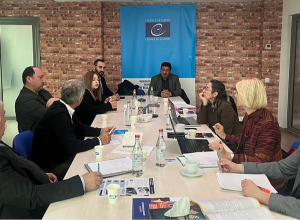
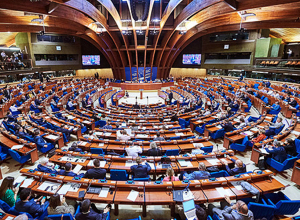
Support A1+!On July 8, 2008 in Yerevan a conference was held on “Media Diversity in Armenia”, organized by the Council of Europe, OSCE and Yerevan Press Club. The conference participants, representatives of media, professional associations, official structures and political parties of Armenia, international organizations and diplomatic missions discussed the urgent issues of the media of the country: the priorities of media legislation reformation; the role of broadcasting regulation in ensuring diversity of opinion; the tasks of media owners, professional communities and journalists to attain real pluralism in the news sphere.
The problems that were manifest recently in the work of the media, primarily the broadcasters, were reflected in many documents on national and international levels. In the ruling of the RA Constitutional Court of March 8, 2008 it was noted that in the course of presidential elections, held on February 19, 2008, “effective control of pre-election promotion was left out of the RA CEC attention”. As regards the body that regulates the broadcast media activities, the ruling of the Constitutional Court said that “National Commission on Television and Radio was formalistic in terms of complying with the law. As a result of this the media coverage displayed not only bias, but also, in some cases, violations of legal and ethical norms”.
The extraordinary report of the RA Human Rights Defender Armen Harutyunyan, published on April 25, 2008 and titled “On Presidential Elections of February 19, 2008 and Post-Election Situation” described, among other issues, the situation of free expression and media in Armenia. Addressing the pre-election processes, the ombudsman stressed the "strongly critical nature” of the coverage the TV companies gave to one of the presidential candidates. While after the official launch of the pre-election campaign the consequent political bias was mitigated, yet “this did not influence the situation qualitatively”. While presenting the post-election situation, the RA Human Rights Defender characterized the coverage of the opposition rallies by the TV companies as “openly negative”. The TV companies continued presenting the viewpoint of only the pro-governmental politicians. During the emergency rule (March 1-20, 2008) “factual censorship was implemented”, the report by Armen Harutyunyan said, although it is prohibited by Article 4 of the RA Law “On Mass Communication” and was not stipulated by the restrictions provided for by the Decree of the RA President on Imposing Emergency Rule. As a result, “the publication of several national newspapers was prohibited for their content”, web sites were also blocked. In the opinion of Armen Harutyunyan, the restrictions imposed by the Decree did not contribute to relieving the tension in the society, either: “A most vivid example of such unacceptable coverage was demonstrated by the First Channel of the Public Television of Armenia, which not only neglected this provision of the Decree, but also once again made a grave infringement of the requirement of Article 28 of the RA Law “On Television and Radio”: “The prevalence of a political stance in the programs broadcast (...) on public television (...) is prohibited”. The RA Human Rights Defender proposed a number of measures to overcome the situation in place, including: “To ensure freedom of expression; create conditions to ensure diversity of opinion and impartiality in electronic media. In this regard, the reformation of the broadcasting legislation will have much significance. It is also necessary to guarantee the equal participation of the representatives of power and opposition in the formation of the bodies, regulating and controlling the activities of TV and radio companies.” The documents above stress the need for practical steps to strengthen media freedom and diversity in Armenia. This issue was also raised in the two recent PACE resolutions. On April 17, 2008 the PACE approved Resolution 1609 (2008) “The Functioning of Democratic Institutions in Armenia”. In Paragraph 8 of its Resolution PACE recalled the commitments of Armenia to the Council of Europe and once again urged the Armenian authorities to make a number of reforms. In particular, Paragraph 8.3 of the Resolution says: “The independence from any political interest of both National Commission on Television and Radio and the Council of Public Television and Radio must be guaranteed. In addition, the composition of these bodies should be revised in order to ensure that they are truly representative of Armenian society.The recommendations made by the Venice Commission and Council of Europe experts in this respect must finally be taken into account. The Assembly reiterates that apart from reforming the legislation, the authorities must take steps to ensure freedom and pluralism of the public television and radio on a day-to-day basis. Also, the harassment by the tax authorities of opposition electronic and printed media outlets must be stopped.” On June 25, 2008 Resolution 1620 (2008) “The Implementation by Armenia of Assembly Resolution 1609 (2008)” was adopted, quoting the four main requirements of the Resolution 1609 (2008) of April 17, 2008, also that “to initiate an open and serious dialogue between all political forces in Armenia” with regard to a number of issues, including freedom and pluralism of the media (Paragraph 1.4 of Resolution 1620). Paragraph 6 of Resolution 1620 (2008) says: “The Assembly recalls that there is a need for a pluralistic electronic media environment in Armenia and, referring to the decision of the European Court of Human Rights concerning the denial of broadcasting license to ‘A1+’, calls on the licensing authority to now ensure an open, fair and transparent licensing procedure, in line with the guidelines, adopted by the Committee of Ministers of the Council of Europe on March 26, 2008 and with the case law of the European Court of Human Rights.” As it was mentioned by the experts in the conference “Media Diversity in Armenia”, those problems were hardly a surprise. They were a consequence of inconsistent reforms and insufficient attention to the recommendations of local and foreign experts, representatives of reputable international organizations. On July 26, 2006 the OSCE Representative on Freedom of the Media Miklos Haraszti released a report on the state of media freedom in Armenia, also presenting recommendations on the improvement of media freedom situation in the country. Noting that limited pluralism in the broadcasting sector was a major problem, as a first step to improve the state of broadcasting Miklos Haraszti recommended that “legislative changes provided for by the Constitutional amendment should be prepared by the Government, discussed in a public forum with members of civil society, and passed in Parliament as soon as possible, certainly before the Parliamentary elections in 2007. However, legislative changes should not be limited to a ‘half Presidential - half Parliamentary’ board. The composition of all boards should represent the political and social diversity of the country, and should include NGOs and professional associations”. As to public service broadcasting, in the opinion of the OSCE Representative, the members of its regulatory body - the Council of Public TV and Radio Company - “should not be selected by one political force or by political forces alone”.The selection criteria, the report stresses, should reflect transparency and ensure both a high level of professionalism and pluralism of reflected views. In order to fulfill the tasks of a genuine public service broadcaster, the Council should carry out continuous monitoring of access of different parties to air time and coverage of their activities, the results of which should be made public. Among the recommendations on private broadcasting the report noted the need for such amendments of the Law “On Television and Radio” that would be clear about broadcast licensing competition procedures: “The selection criteria must include the interests of pluralism; the licensing process must become more transparent, using more quantifiable, thus publicly controllable benchmarks. ”Despite the anti-monopoly provision in the broadcast Law stipulating that “each physical or legal entity can be licensed only for one Television and Radio Company”, in Armenia there are people who own several broadcasting companies, which, in their turn, share the same buildings and staff members. “This means that there aren’t any guarantees for pluralism in ownership, which, in any society, is the foundation for a pluralistic access to information”, Miklos Haraszti stressed in his report. The conference discussions showed that there is an urgent need for reforms to improve media plurality. In particular there was a unanimous opinion that the law and practice of broadcast media regulation needs to be brought in line with Council of Europe standards. The agenda of this and other necessary reforms has already been defined over the past years in the above mentioned documents and commonly accepted assessment of media situation in Armenia. The fulfillment of this agenda will enable Armenia to comply with the requirements of PACE Resolutions 1609 (2008) and 1620 (2008) in time for the January 2009 session. To ensure success of this process there is a need for an open and serious dialogue which involves the country’s authorities, international and local experts, civil society and all political forces.