I don't want the Turks to come
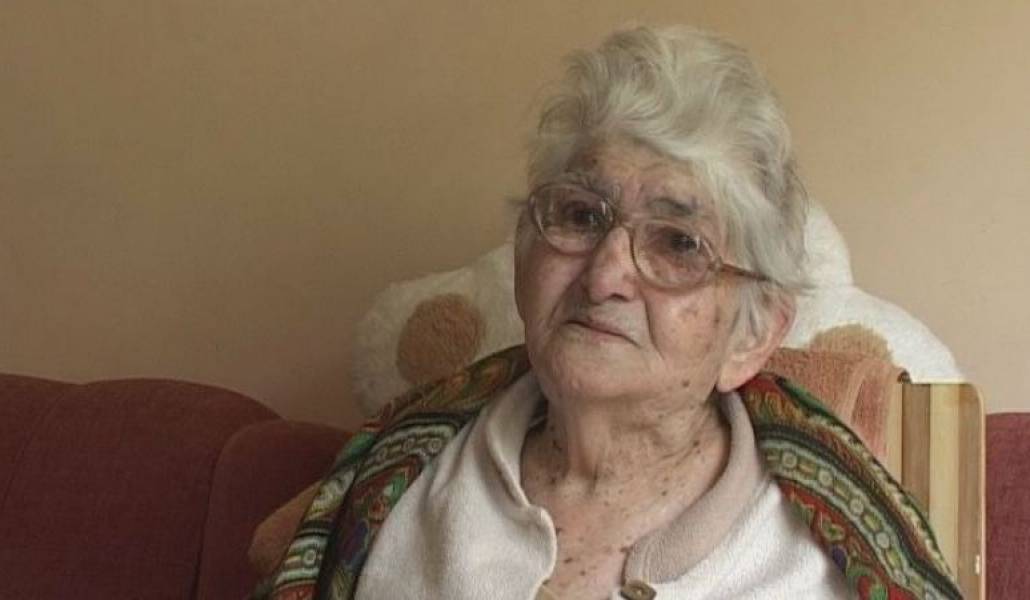
Arus Grigoryan was born in Kars and was only two years old during the Armenian Genocide.
Arus Grigoryan, 97, doesn't remember much from the historical homeland, but has a dream. "If they let me, I will go to Kars. I want to see Kars and then die. I want to see Kars, but not live there. I can smell Turks there."
Arus lives with her daughter and grandchild in an apartment located in Kentron district Yerevan. She only remembers a couple of episodes from the barbarities of the Turks.
"The Turks killed and massacred us. They would enter homes and hang people. They treated us very badly." She told the story of how the Turks killed her father, how her godfather Hovhannes threw her and her brothers in a train wagon and instructed the driver to "drop the kids off wherever the train stops."
After migrating to Armenia, Arus's mother died from hunger. She was homeless and an orphan and lived in one of the capital's parks for a while, slept on benches until she caught the attention of the director of an English orphanage Nord Kort who took her to the orphanage.
Although Arus and her brothers were treated very well here, the pain and suffering of the Armenians remained in her memory since childhood. That is the reason why Arus doesn't even want to hear about the opening of the Turkish-Armenian border. "I don't want the border to open. I don't want the Turks to come here. They must not enter Armenia."
Arus is politically active and, according to her daughter Evelina Grigoryan, Arus never misses out on a news program. "I want us to win after all the suffering. I wait day and night for the day when the world will recognize the Armenian Genocide," says Arus.
The 10 years in the orphanage have been instilled in her memories as days of salvation. After leaving the orphanage, she studied at a vocational school and got accepted to the Polytechnic Institute, but left her studies behind after getting married. Arus has 4 children.
Arus was very emotional throughout the conversation as she reminisced about this or that episode of her life. Arus wasn't able to listen to the song "Otar, amayi tchampeki vra" (On foreign, deserted roads) until the end, although she did perform an English religious song that she had learned at the orphanage until the end.
Arus only wishes that the government pay more attention to her and support her financially as a survivor of the Armenian Genocide.