CORRUPTION HAS BECOME MORE WIDESPREAD WITHIN THE PAST THREE YEARS
Support A1+!January 31, 2007, Yerevan —The corruption perception survey was implemented by Center for Regional Development/ Transparency International Armenia (CRD/TI Armenia) with the support of UNDP Armenia Office from July-December 2006. The results of the survey revealed that nine out of ten citizens consider corruption as a problem or a major problem in Armenia. In addition, nine out of ten respondents stressed that free and fair elections is one of the solutions to improve the anti-corruption situation in Armenia.
The results of the 2006 survey indicated that the citizens of Armenia are still very much concerned about corruption. 89.0% of the surveyed citizens see corruption as a problem or a major problem in Armenia. 40.1% of the respondents considered corruption as crime and 11.81% as an immoral behavior. In 2006, nearly five times more interviewees (67.7%) than in 2002 (14%) stated that corruption has always existed in Armenia. The majority of interviewees (64.0%) believe that the level of corruption has increased during the last three years.
Most people both in 2002 and 2006 still think that bribery and abuse of public office for personal gain are the main manifestations of corruption. They still believe that the state authorities are those who mainly initiate corruption and that more corruption occurs in the high level of the Armenian government system.
However, the responses concerning the most corrupt institutions (structures) have changed since 2002. While the prosecution system was mentioned again in 2006, the Prime Minister’s Office and the courts that were mentioned in 2002 were replaced by the Prime Minister and the Ministers in 2006.
As to the most corrupt sectors and services, the traffic police are still perceived by the public as very corrupt (68.2%). In addition, the majority of respondents selected the electoral system (73.9%) and the tax service (63.3%) as most corrupt, while in 2002 the military and health sector were given similar marks.
The 2006 survey revealed new sectors to which unofficial payments were made, as reported by interviewees. These are the State Registrar, the Office of Enforcement of Court Decisions, foreign embassies, environment-related services, condominiums, as well as the Register of Civil Acts, in addition to healthcare, education, traffic police, tax, customs, cadastre, military, local self-government bodies, notary offices, which were also mentioned in 2002.
Whereas the majority of the 2002 respondents thought that the main causes of corruption are poor law enforcement, imperfect legislation and inefficient control and punishment mechanisms, in 2006 an increased number of interviewees were inclined to see public tolerance as one of the major causes of corruption in Armenia.
According to the findings of the 2006 survey, 69.4% of the public is not aware about the Anti-Corruption Strategy, 84.4% about the Anti-Corruption Council and 91.4% about its Monitoring Commission, as well as about Armenia’s international obligations in the fight against corruption (84.3%).
While prioritizing the solutions to improve the current situation, 89.0% of the respondents pointed to a necessity of ensuring free and fair elections. They also referred to strengthening law enforcement (93.9%) and punishment of those involved in corruption (91.9%) as a key to the success of reducing corruption in the country. Both in 2002 and 2006, the majority of interviewees continue to believe that the President of the country could play a determining role in reducing corruption in Armenia. More than half of the respondents felt that people themselves cannot do anything.
In 2006, 39.0% of the respondents said they could not justify corruption at all. In 2006, 50.7% of respondents answered that they would not take bribes since it is unacceptable for them, whereas in 2002 only 17% of the respondents were of the same opinion.
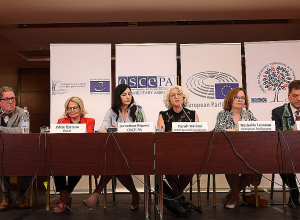
The above data was presented today at the presentation of “2006 Corruption Perception Survey in Armenia” publication, which took place in the Congress Hotel. The survey results were presented by the Chairwoman of the CRD/TI Armenia Ms. Amalya Kostanyan. The event brought together public figures, representatives of NGOs and international organizations, as well as mass media. Ms. Consuelo Vidal, UN Resident Coordinator and UNDP Resident Representative, Ambassador Vladimir Pryakhin, Head of OSCE Office in Armenia, Ms. Bojana Urumova, Special Representative of Secretary General of CoE to Armenia, and Ms. Anna Aghadjanian, Head of the Human Rights Division of the International Organizations’ Department, Ministry of Foreign Affairs of Armenia were key speakers of the event.
The survey was implemented by CRD/TI Armenia with the support of UNDP Armenia Office. The organization carried on a similar survey in 2002, and analogous survey questionnaire was developed in 2006 to ensure a comparison with the previous data.