New archeological site discovered in Togh village
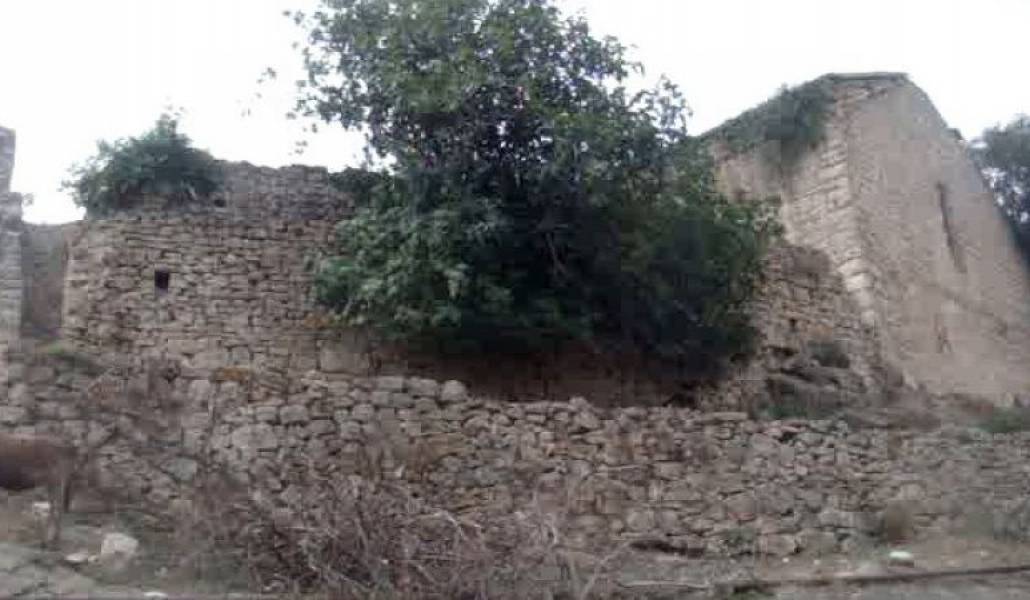
Prince Egan palace complex was discovered during the 1,5-month excavation in the vicinity of Togh village, Karabakh. The complex dates back to the 18th century and was carefully hidden by Azerbaijanis. It was discovered only after their departure.
Village headman Alexander Shaburyan says during the Soviet era Azerbaijanis covered the archeological site with soil and built a school in front of the palace to hide it from Armenians.
The most striking is that an Azeri who resided in the two-storey palace did not pull down the walls engraved with Armenian letters and khachkars and added a third floor to the main building.
"Those Azeris were afraid of Armenians and were careful to Armenian palaces," said the headman.
The excavation was realized by an expedition party of the Institute of Archeology and Ethnography of the RA National Academy of Sciences.
"Starting from the 17th century, there were five principalities in Karabakh, including Varanda, Gyulistan, Togh, which were called Khamsa Principality. Togh's principality was founded by Egan," says the head of the expedition party Aghavni Jamkochyan.
The party has excavated a small part of the palace. Egan's reserve is impossible to fully open as the site is populated. The group thinks that earlier the site served as an inn.
Arriving at Togh, Egan supposedly restored it and appointed his father Ghukas the abbot of St. Hovahannes Church.
"Abbot Ghukas and great diplomat Melik Egan are buried in the churchyard," said Aghavni Jamkochyan.
Scientific worker Frina Babayan says the excavation of Togh is of strategic importance since the liberation war started not in 1988-1989 when Togh was the center of the conflict but much earlier.
Principalities struggled for centuries to liberate Karabakh from Turks, Persians and Arabs. Sometimes, their efforts crowned with victory, sometimes they failed. Today we have an opportunity to see our liberated lands," says the scientific worker.